
Anatomy of an Anvil: Why I Still Use a 100-Year-Old Tool
Modern anvils lack the rebound and soul of forged-steel historic pieces. A deep dive into the Peter Wright anvil that has shaped twenty-five years of metalwork.
The Soul of the Forge
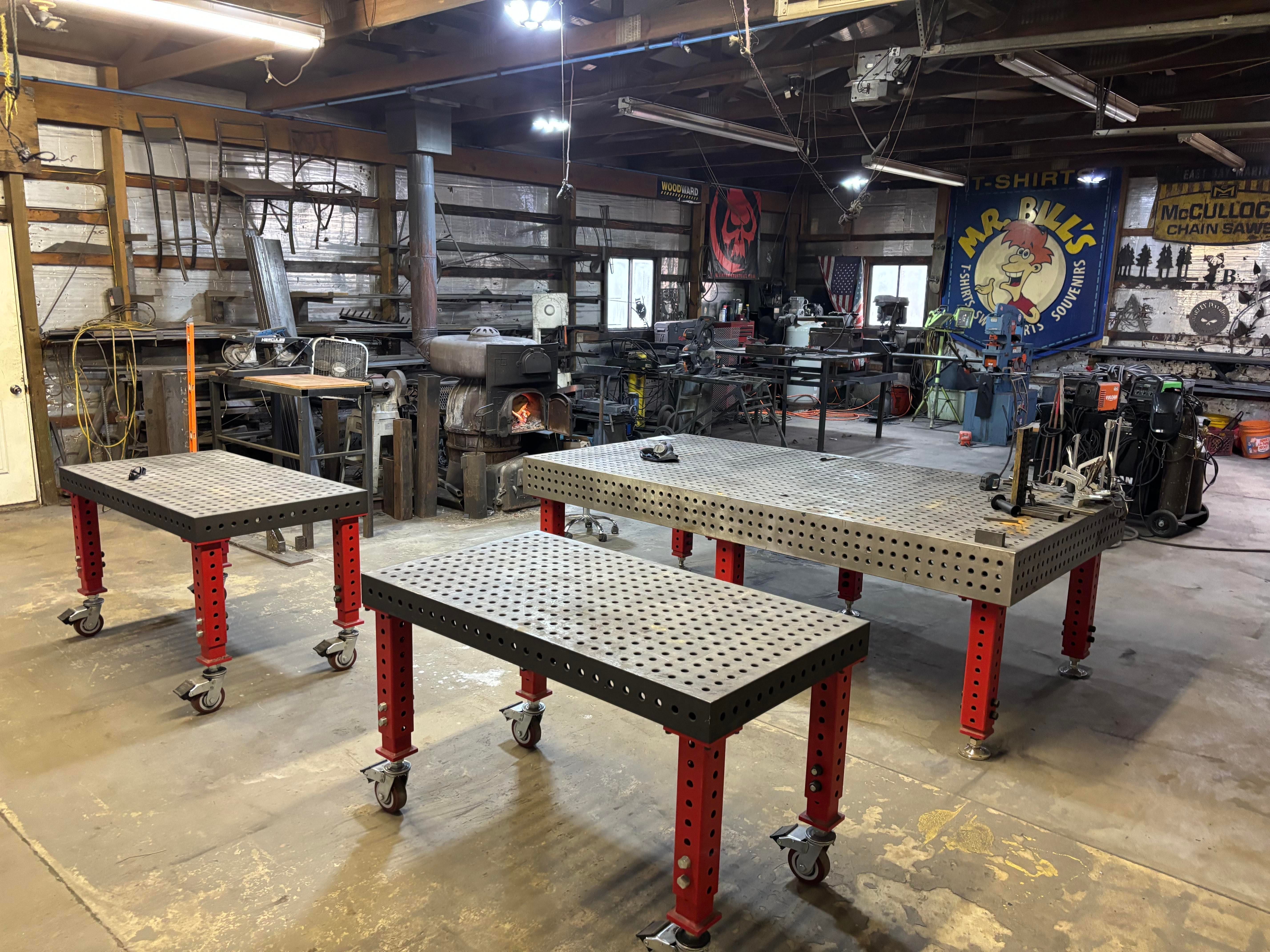
Walk into my workshop and your eye will eventually settle on it: a massive, dark shape silhouetted against the forge's glow. My Peter Wright anvil, manufactured in Birmingham, England around 1890, weighs 278 pounds of forged wrought iron with a hardened steel face. Its edges are rounded from a century of hammer blows. Its waist bears the scars of countless hot cuts and chisel work. When you strike steel upon it, the sound is unmistakable—a clear, bell-like ring that speaks of density, rebound, and history.
I've been asked many times why I don't upgrade to a modern anvil. New cast steel anvils are readily available, precisely machined, perfectly flat, and significantly cheaper than quality vintage tools. But those who ask have never felt the difference between working on a forged anvil versus a cast one. They've never experienced the way a proper anvil seems to push back, to participate in the forging process rather than merely absorb it.
Understanding Anvil Physics
The essential function of an anvil is to provide a resistant surface for hammer work while returning energy to the workpiece—a quality called "rebound." When you strike hot steel, ideally about 30% of the hammer's energy should return, helping to move the metal with less effort and more control. This rebound comes from the elastic properties of the anvil's face and the way vibrations propagate through its mass.
Historic anvils like my Peter Wright were forged from multiple pieces of wrought iron welded together under massive hammers, then given a thin layer of hardened tool steel on the face. This construction creates a specific harmonic signature that modern cast anvils, even good ones, struggle to replicate. The grain structure of forged steel, aligned by the forging process, transmits energy differently than cast steel with its random crystalline structure.
When I strike work on my anvil's "sweet spot"—the center of the face where the rebound is maximum—I can feel the tool working with me. The hammer bounces back with predictable timing, allowing rhythmic, efficient forging. Move to a lesser anvil, and that feedback disappears. The hammer feels dead. The work progresses slower. The subtle communication between hand, hammer, anvil, and metal is lost.
The Peter Wright Story
Peter Wright & Co. was one of the premier anvil manufacturers of the Industrial Revolution, operating in Birmingham from the 1830s until the 1930s. Their anvils are identifiable by the distinctive logo—a stylized "P" and "W" separated by an anvil shape—stamped into the lateral waist. Mine also carries weight markings in the old English hundredweight system: "2-1-14", indicating 2 hundredweight (224 pounds), 1 quarter (28 pounds), and 14 pounds, totaling 266 pounds though it actually weighs slightly more.
The construction technique was sophisticated for its era. Wrought iron bodies were built up from multiple forge-welded sections, creating a fibrous structure that resists cracking and ringing. The steel face plates were attached using a technique called "fire welding"—heating both pieces to welding temperature and hammering them together with borax flux. When done properly, this creates a molecular bond stronger than either parent material.
Why Age Matters
Anvils improve with age in ways that might seem counterintuitive. The process of crystalline realignment in the forged iron, called "seasoning" by old-timers, gradually enhances the elastic properties that create good rebound. A century of vibration from hammer blows subtly works the metal at a molecular level, relieving internal stresses from the original forging.
Additionally, older anvils have proven their quality through survival. The poor anvils—those with hidden forge weld defects, inadequate steel faces, or inferior iron—failed decades ago. They were scrapped, recycled, forgotten. The ones that remain, like my Peter Wright, have demonstrated their structural integrity through a hundred years of daily use. They're the survivors, the proven tools.
Modern cast anvils, even expensive ones, are an unknown quantity. The casting process can hide voids, inclusions, and crystalline defects that only reveal themselves under years of hammer impact. I've seen modern anvils develop "dead" spots, cracks, and face delamination that would have been apparent in the first decade of a forged anvil's life.
The Soul of the Tool
Beyond the physics, there's something else that separates vintage anvils from modern reproductions: the evidence of previous hands. The rounded edges on my anvil weren't designed that way—they were shaped by countless previous smiths cutting hot steel, forging tenons, creating shoulders. The slightly swayed face (a gentle curve across its width) developed over decades as the center received more hammer blows than the edges.
These aren't defects. They're the accumulated wisdom of generations. When I work at my anvil, I'm standing where other smiths stood, using a tool they used, continuing a chain of craft that stretches back through the Industrial Revolution to medieval Europe and beyond. The anvil connects me to something larger than myself, larger than my workshop, larger than this moment in time.
I can identify particular marks on the anvil's surface and know what techniques created them. The diagonal scar near the hardy hole came from someone using a hot cut hardie at an awkward angle. The polished spot on the far edge suggests a previous owner preferred that location for finisher hammer work. These marks tell a story, a biography written in steel.
Modern Anvils Have Their Place
I don't want to suggest that modern anvils are worthless. For beginners, for occasional hobbyists, for educational settings where the anvil will see light use, modern cast steel anvils offer accessibility that vintage tools cannot. A decent new anvil costs $800-1200, while equivalent vintage anvils command $2000-4000 or more.
Some modern manufacturers—particularly those using forged steel construction rather than casting—produce excellent tools. But they're rare and expensive, essentially reproducing at premium prices what was once standard production. The mass-market anvils available at most blacksmithing suppliers are adequate for learning, for light work, for crafts that don't require the subtle control that rebound provides.
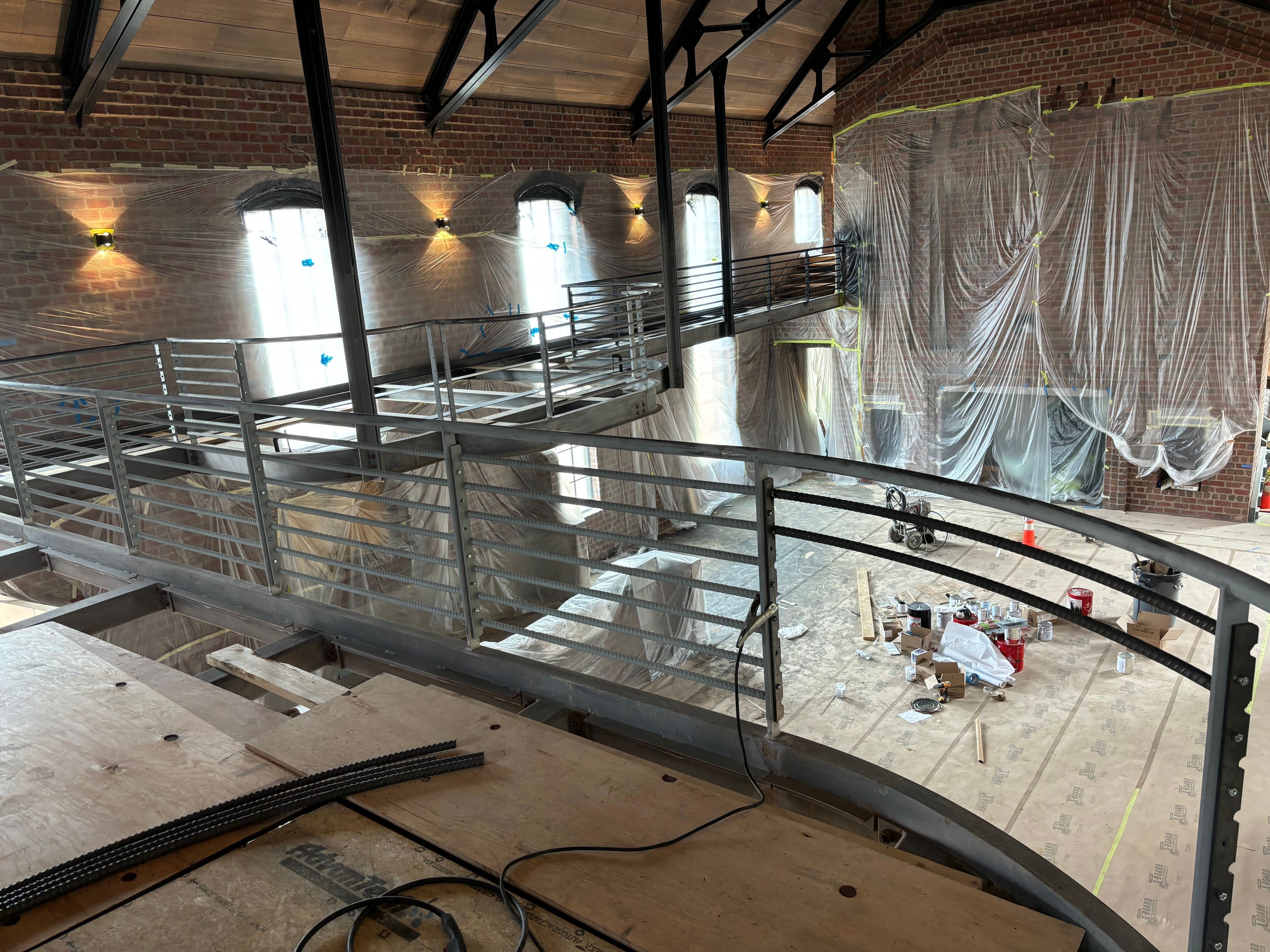
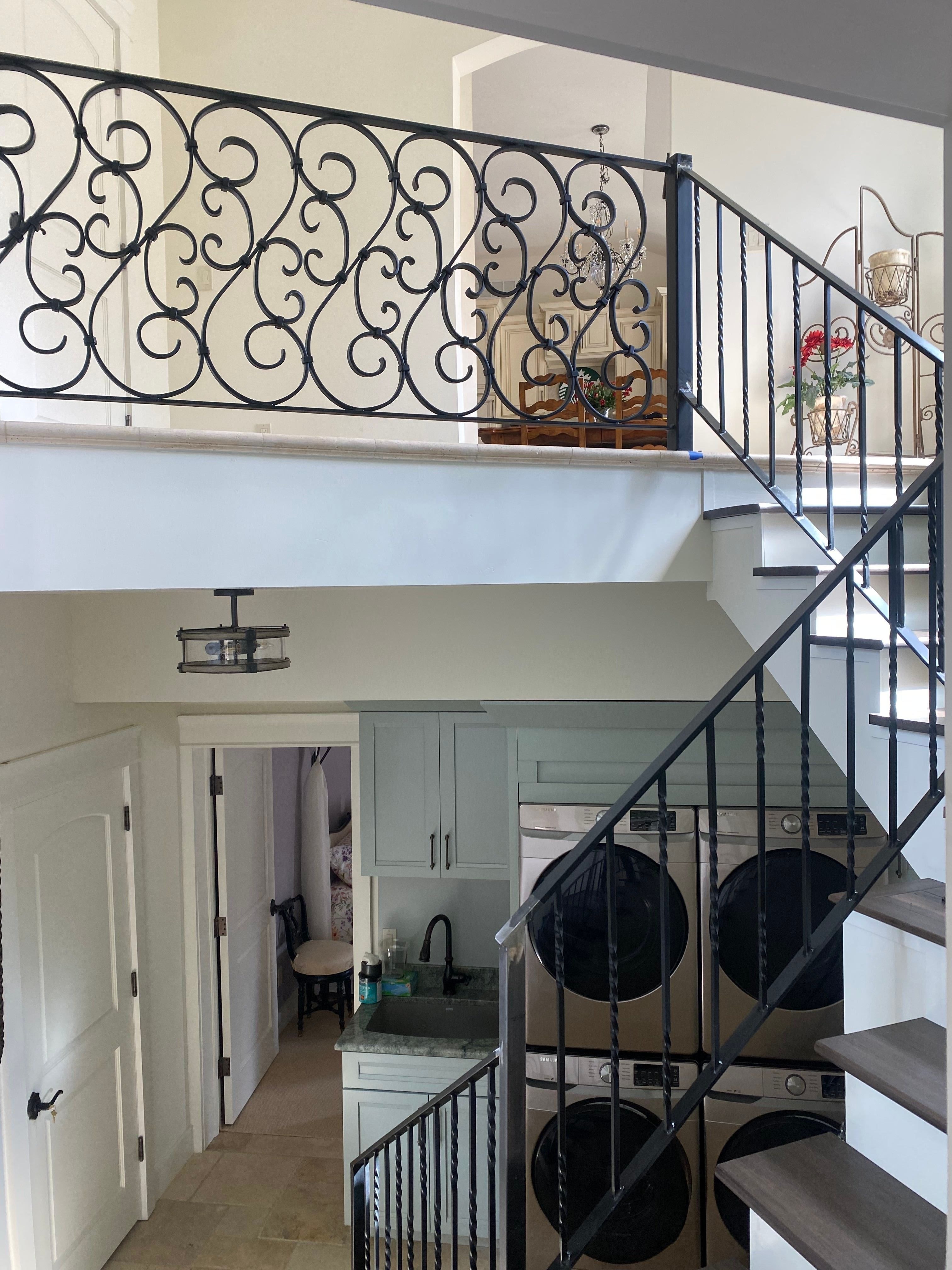
But for serious architectural metalwork, for the kind of precise, controlled forging that produces the railings, gates, and furniture we create at Matt Coffey Design, I wouldn't trade my Peter Wright for any modern tool. The difference in work quality, in efficiency, in the sheer pleasure of the craft is too significant.
Maintenance and Care
Anvils require minimal but specific care. The face must be kept clean of scale and debris, which can embed in the work and create surface defects. I keep a wire brush handy and clean the face between heats. The hardy hole and pritchel hole need periodic clearing to ensure tools seat properly.
Perhaps most importantly, anvils must be secured to their bases with appropriate resilience. Rigid mounting—bolting directly to a concrete floor—transmits vibration that damages both the anvil and the smith's joints. Traditional wooden stumps or modern fabricated stands with elastomeric isolation allow the anvil to ring while protecting its foundation.
My Peter Wright sits on a massive oak stump I shaped from a storm-felled tree on my property. The stump is approximately 24 inches in diameter and 36 inches tall, bandsawed flat on top and treated with linseed oil. The anvil sits on a layer of silicone-impregnated cork gasket material that provides isolation while preventing the anvil from shifting under heavy blows.
The Connection
When I'm working at the anvil—truly working, not just going through the motions—there's a connection that forms. The anvil becomes an extension of my intention, a solid foundation for my creativity. I can feel the heat in the steel through the hammer's rebound. I can sense when the metal is moving properly, when it's resisting, when it needs another heat.
This connection isn't mystical. It's the result of decades of practice, of developing the proprioceptive awareness that allows a craftsman to work by feel rather than sight. But it's only possible with a tool that communicates, that responds, that has the capacity to meet the craftsman halfway.
My Peter Wright anvil has been meeting smiths halfway for over a century. I hope to use it for another few decades, and then pass it to the next generation with a few more stories added to its surface. Some tools are just equipment. Others become partners in the craft. This anvil is a partner, and I consider myself fortunate to be the current steward of its long history.

Subscribe to the Journal
Receive new articles on craft, materials, and architectural metalwork directly to your inbox. No spam, just forged insights.
Ready to Create Something Lasting?
Let's discuss how traditional metalworking techniques can bring your architectural vision to life.
Start Your Project